Democratization: The basics

PSCI 2227: War and State Development

Prof. Brenton Kenkel

Vanderbilt University

March 16, 2026

“Quiz” feedback results

  • Positive reactions
    • Reading quizzes as accountability mechanism
    • Organization and course website
    • Most didn’t mention the project, but those who did were positive
  • Mixed reactions
    • Some feel like we’re racing through topics, others feel like we’re lingering too long
    • Some like the lectures, others think they adhere too close to the readings
  • Negative reactions
    • Lot of apprehension about the midterm, especially question complexity and the essay
    • Too little in-class interaction

Recap

Before spring break: war and parliaments

  • War \(\leadsto\) ruler needs money \(\leadsto\) must bargain with elites to get it

Kenkel and Paine on how external threats shape conditions for bargaining

  • Ruler willingness: increases with external threat
  • Elite willingness: harmed by external threat if wealth is mobile
  • Elite credibility: harmed by external threat if wealth is immobile

Cox, Dincecco, Onorato on why parliaments emerged in the first place

  • “Window of opportunity”: urban wealth exists, tax bureaucracy doesn’t
  • Find that war \(\leadsto\) earlier parliament under these conditions

Today’s agenda

  1. The basic obstacle to democratization
  2. Two paths to democracy: revolt vs. elite concessions
  3. Acemoglu and Robinson’s theory of franchise expansion
    • Why permanent institutional change instead of temporary policy concessions?
    • The commitment problem logic
  4. Connecting democratization back to war

Democratization

The basic obstacle to democratization

Most people are not very wealthy

Political elites in non-democratic societies are (typically) very wealthy

If you let the people take power, they might use it to take your wealth

Two paths to democracy

1. Popular revolt — remove tyranny by force
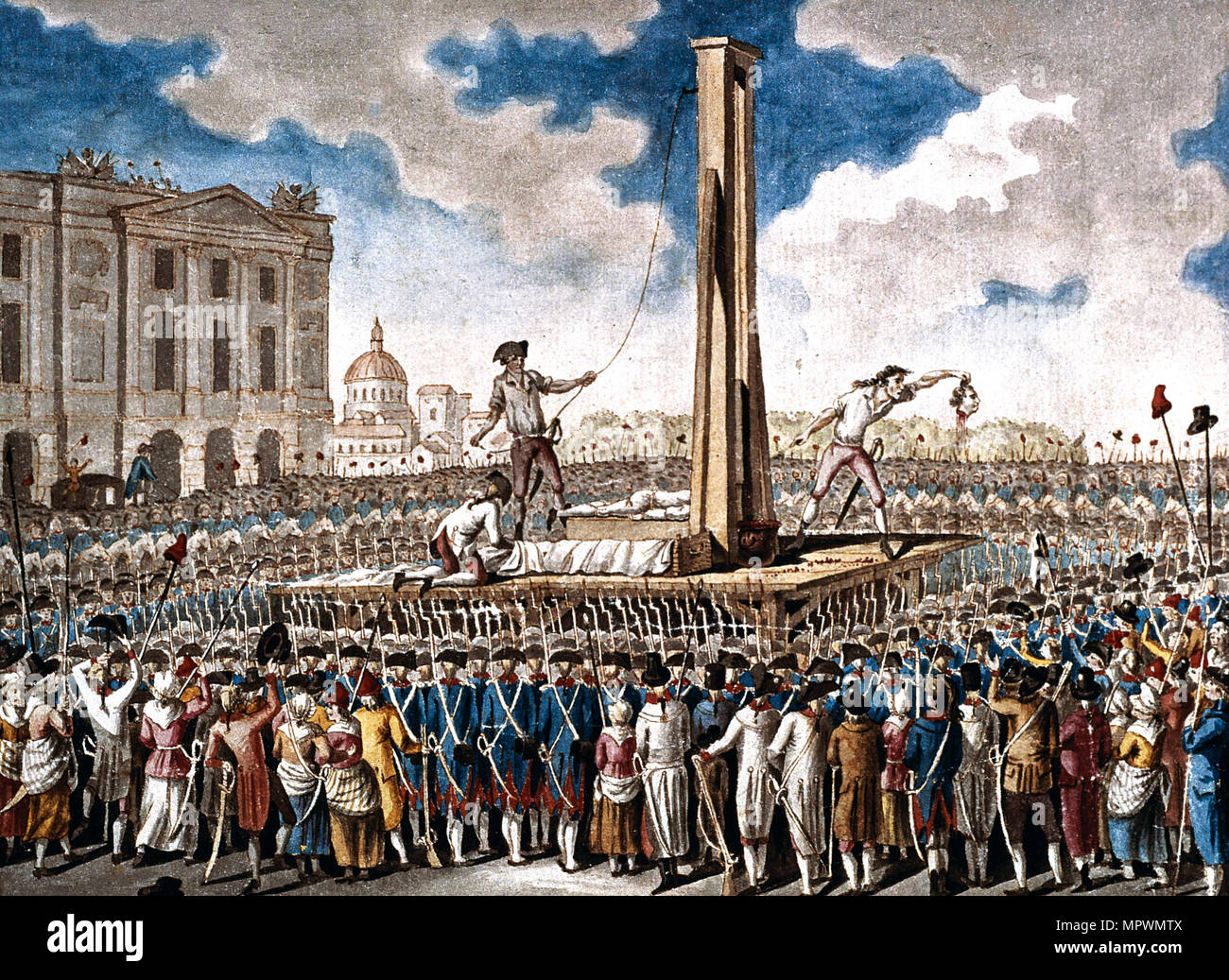
example: French Revolution

Two paths to democracy

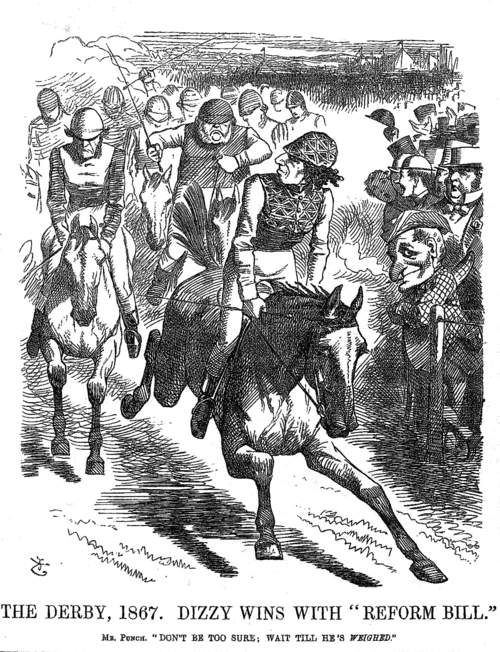
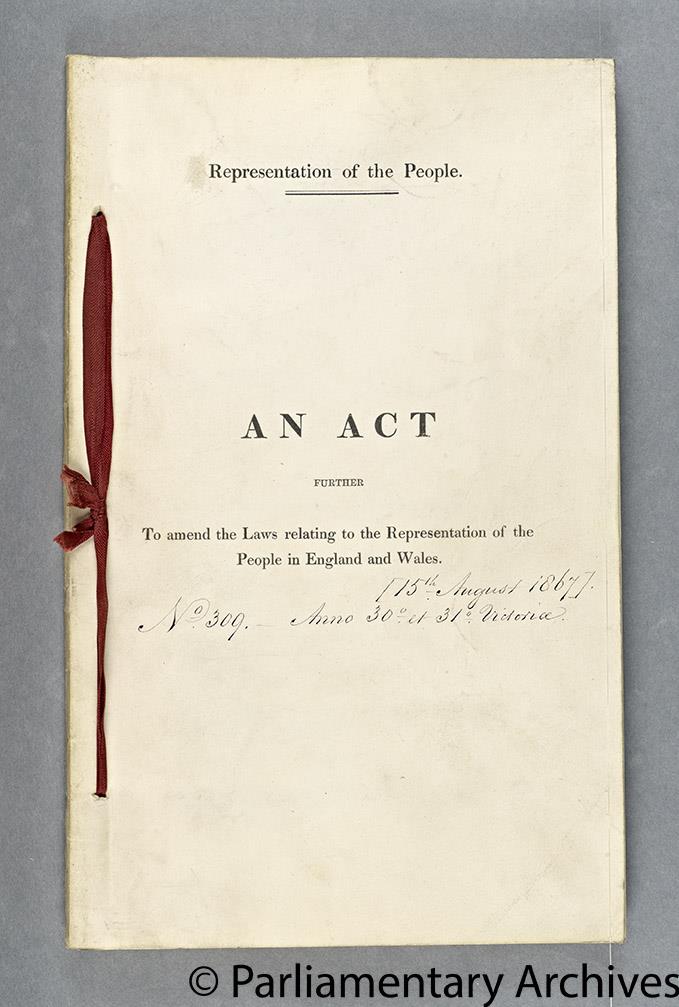
2. Elite concessions — extend political rights without open revolt

example: franchise expansions in Britain
Current democracies
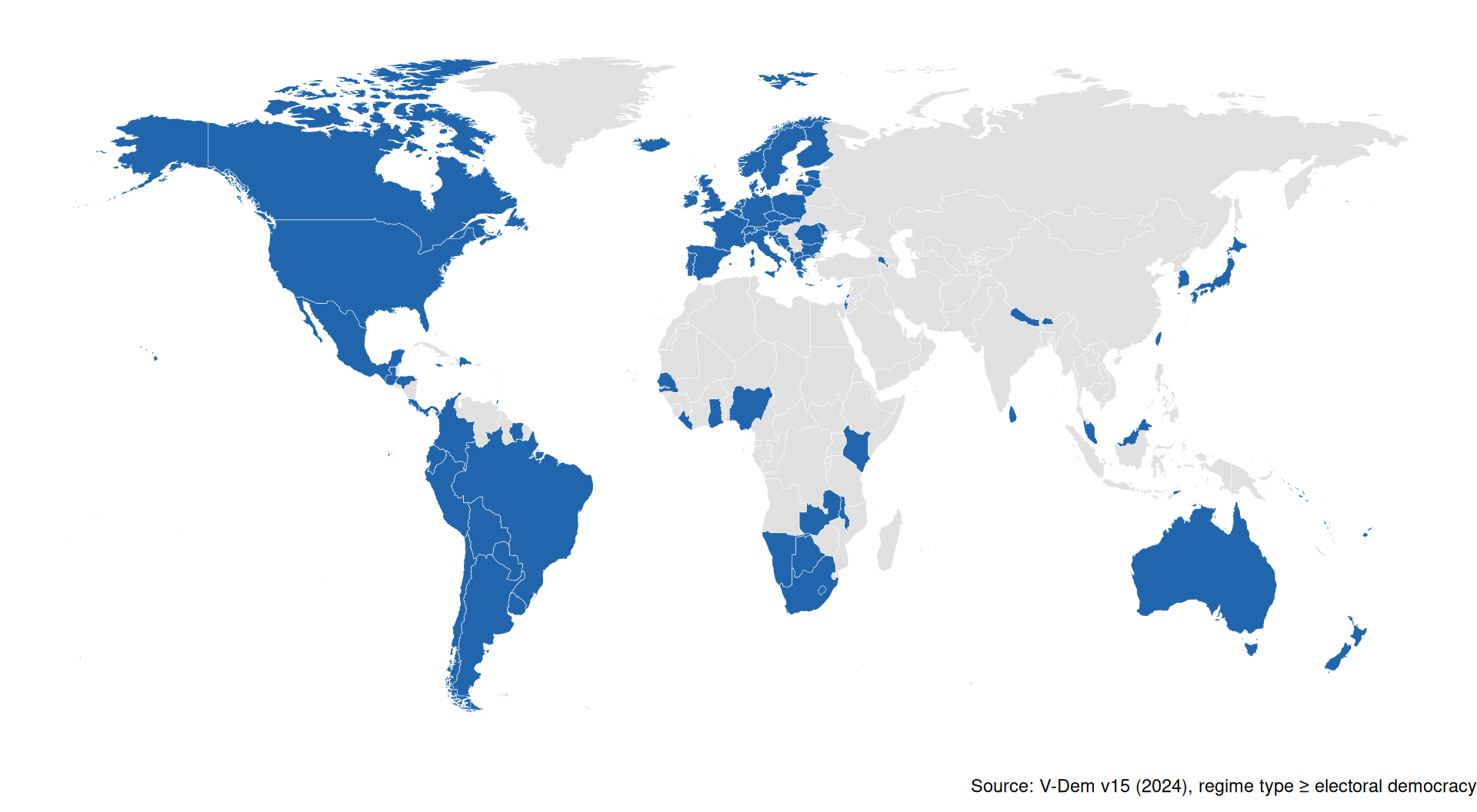
Democracies established through open revolt
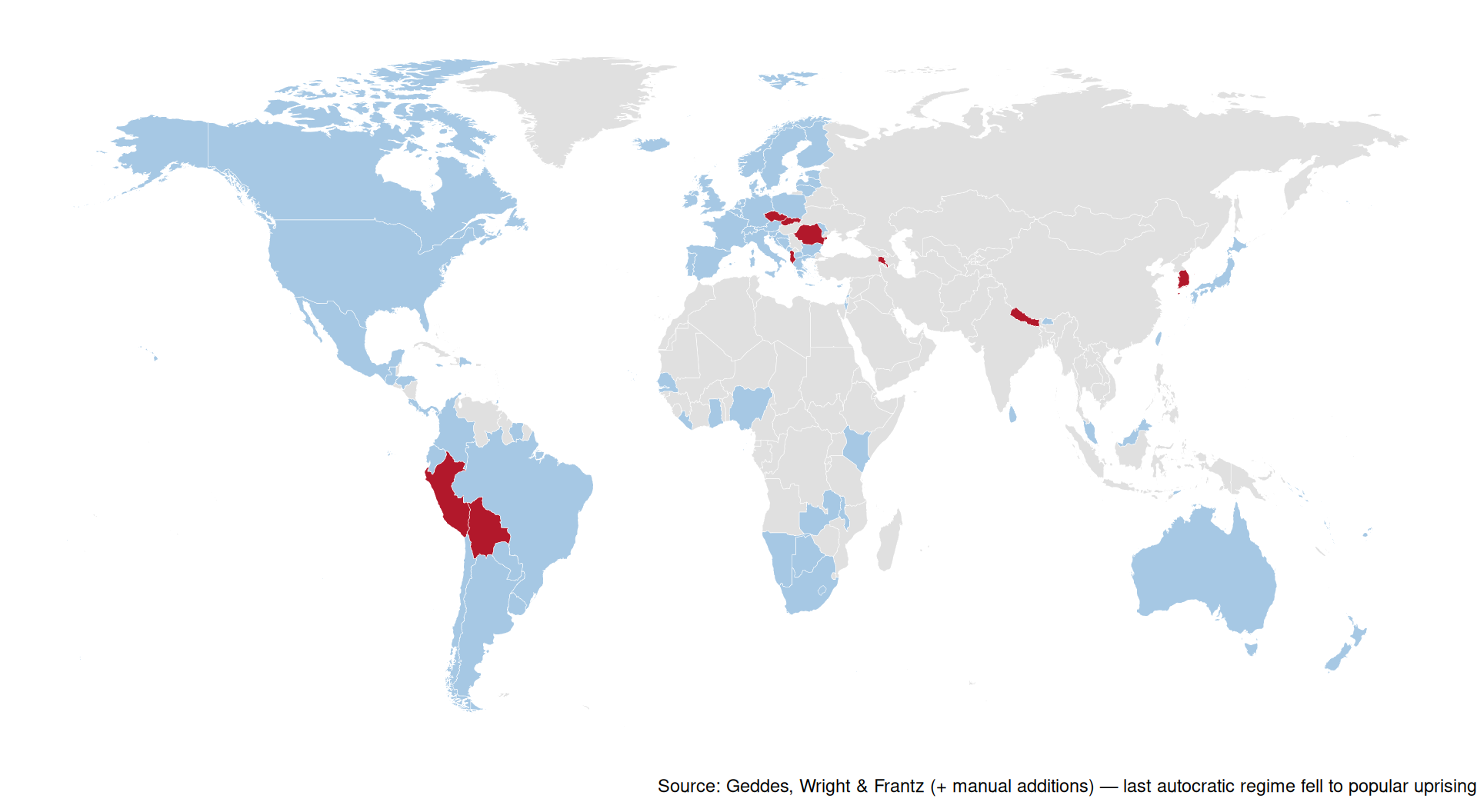
Motivations for franchise expansion

No outright uprising does not mean public pressure was unimportant

Franchise expansion doesn’t happen out of the goodness of elites’ hearts

Example: USA civil rights movement
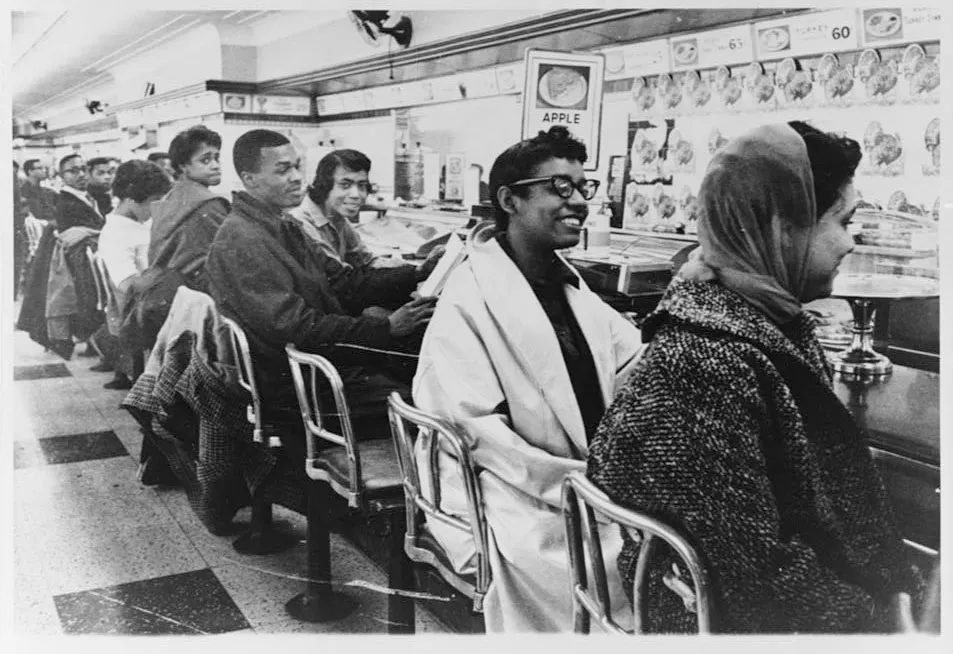
1960 sit-in at a Nashville lunch counter

Acemoglu and Robinson: key stylized facts

Typical path to democracy is elites giving up power, not being overthrown

…but this happens in the shadow of revolutionary pressure

Franchise expansion tends to occur when inequality has risen

…and inequality starts declining afterward

A&R’s task: come up with a theory that explains all these patterns

The key decision point for the elite

Discussion topic

Put yourself in the position of a wealthy political insider

Popular pressure is building, and you have two options to cool it:

  1. Enact a redistributive policy (welfare, pension, health care, etc)
  2. Alter the political system by expanding voting rights

What political/economic conditions would lead you to choose franchise expansion over a direct policy concession?

Acemoglu and Robinson’s theory

Premises

  1. Policies are temporary, while franchise expansion is (more) permanent
  2. The threat of mass revolt is only active on occasion
    • collective action problems, preventive repression, etc.

Conclusions

  • All else equal, elite prefers to placate masses with temporary concessions
  • Sometimes, no temporary concession can be enough to forestall revolt
    • Revolt threat infrequent — now or never
    • High inequality — stakes too big to back down
  • Temporary concession insufficient + threat active \(\leadsto\) franchise expansion

The commitment problem logic

Elites’ first best: Never share any power

Elites’ second best: Give away the minimum amount to prevent revolt

Instead of expanding franchise, why not promise future redistribution?

Commitment problem for this promise (aka time inconsistency)

  • When facing revolt threat, elite would make this promise
  • …but no reason to keep adhering once the threat dissipates

Discussion topic

Are there long-term commitment devices besides franchise extension that elites could use to avoid revolt?

The British example

1832, 1867, 1884.

  • Unusual rioting in early 1800s
  • Reforms relaxed property reqs, electorate from 400k to 5.5m
  • Earl Grey, 1831: “The Principal of my reform is to prevent the necessity of revolution”

1918. Universal male suffrage (lower age for veterans) and limited female suffrage.

1928. Universal female suffrage.

The German counterexample

Germany also faced unrest in 1800s, but didn’t democratize

Yet Germany under Bismarck also had an unusually well developed welfare state for the 1800s (pensions, health care)

A&R’s claim: well organized labor movement in Germany \(\leadsto\) frequent mass threat \(\leadsto\) credibility of promises of ongoing redistribution
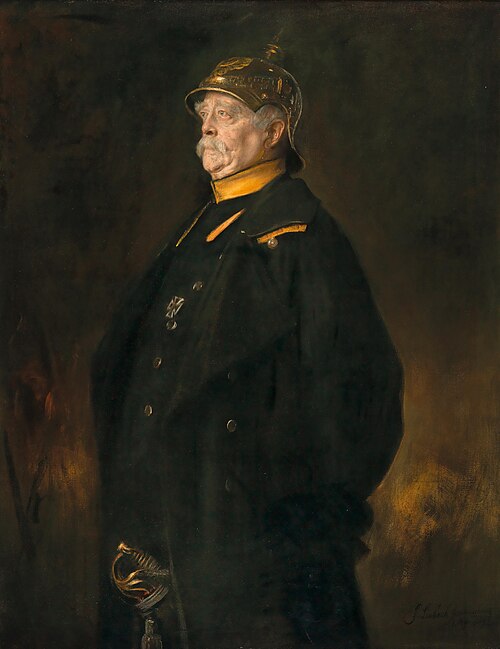
Otto von Bismarck

Democratization and war

Key variables in A&R’s theory:

  • Frequency of mass organization that could threaten elites
  • Credibility of mass revolt threat (costliness, likelihood of success)
  • Wealth gap between elites and masses

Discussion topic

How would you expect each of these to be affected when war begins? What about when a war has just ended?

Wrapping up

What we did today

  1. The basic obstacle to democratization
    • Elites fear redistribution if masses gain political power
    • Two paths: popular revolt (rare) vs. elite concessions (typical)
  2. Acemoglu and Robinson’s theory
    • Policies are temporary, franchise expansion is permanent
    • High inequality + infrequent revolt threat \(\leadsto\) temporary concessions aren’t enough
    • Commitment problem: promises of future redistribution aren’t credible
    • Britain (concessions under threat) vs. Germany (welfare state with frequent organized labor)
  3. Democratization and war
    • War affects mass organization, revolt credibility, and inequality — all key variables in A&R

The rest of the week

Tuesday, 2:00–3:30pm. My office hours, Commons 326.

Wednesday. Read Przeworski 2009, “Conquered or Granted?”

Friday, 3:00–4:30pm. Seungho’s office hours, Commons 3rd floor TA office.

Friday, 11:59pm. First draft of research paper due.