European states: From war or wheat?

PSCI 2227: War and State Development

Prof. Brenton Kenkel

Vanderbilt University

February 2, 2026

Recap

Way back before the ice storm, we talked about Tilly…

  1. Bargaining model of war
    • Necessary condition: military balance out of whack w/ status quo
    • Why bargaining fails: private information, shifting power, domestic politics
  2. Tilly’s theory of European state development
    • War makes states — develop or die out
    • Institutional developments persist into peace — and increase the incentive for further war
    • Commercial/capitalist states advantaged in both ends of process

Today’s agenda

Two ways to evaluate the war-made-states thesis

  1. The tempting-but-wrong way
    • Look at biggest consolidated states
    • See whether they fought a lot of wars
  2. The systematic approach — Abramson 2017
    • Collect systematic data on the European state system
    • Look for patterns consistent w/ Tilly thesis
      • Did states grow when war became more capital-intensive?
      • Were bigger states more likely to survive?
    • Competing hypothesis + evidence: urbanization drove the formation of — mostly small — states

Selective versus systematic approaches

War made the biggest states

A seemingly natural way to evaluate the Tilly thesis

  • Look at the most successful consolidated territorial states
  • Examine the role of war in their development
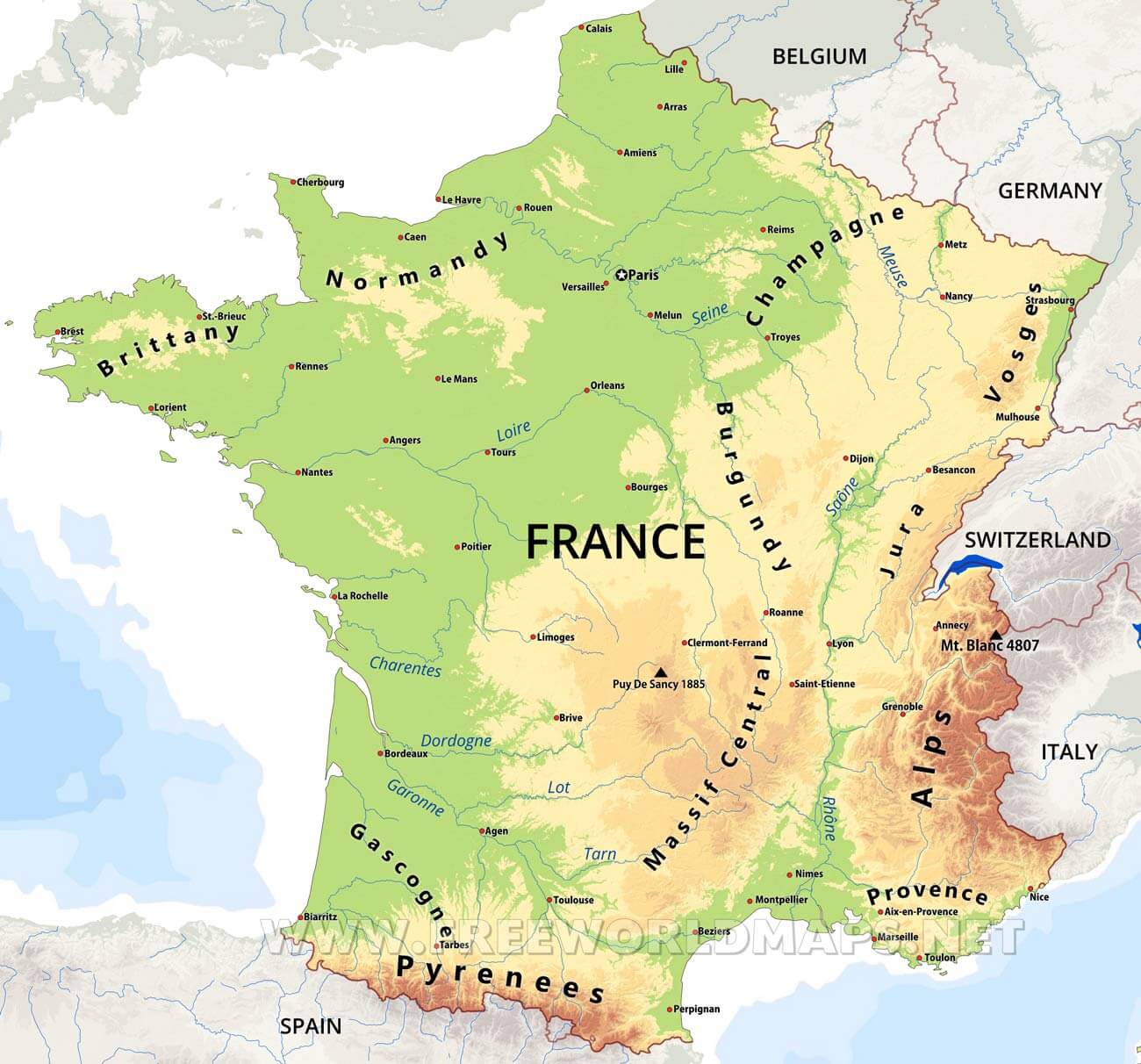
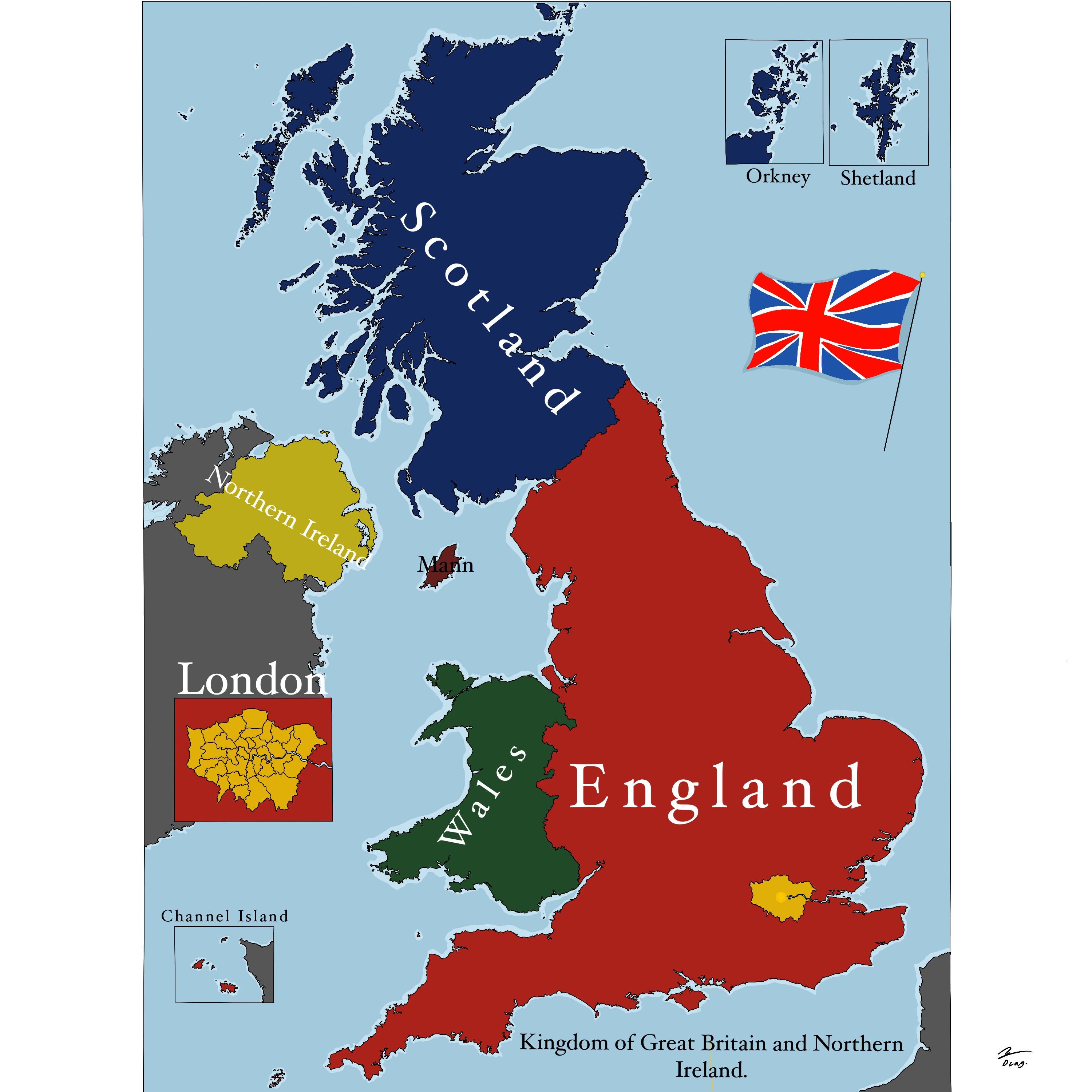
France

UK

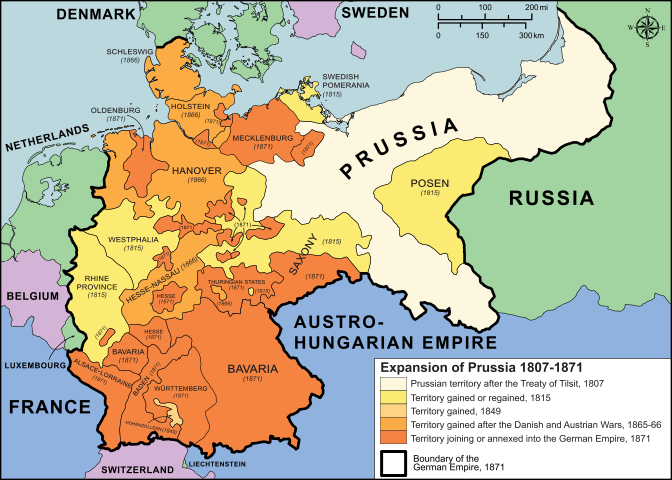
Prussia/Germany

War and statebuilding in France

1439 — Hundred Years’ War — permanent establishment of land tax

1620s–1640s — Thirty Years’ War — Cardinal Richelieu fought noble influence on army, tore down their castles

1650s–1710s — Louis XIV — constant wars, absolute rule

1790s — French Revolutionary Wars — raising of mass army, rights/representation expanded

War and statebuilding in the UK

1330s–1450s — Hundred Years’ War — tax increases like in France

1642 — English Civil War — parliamentary rebellion against attempted absolutism

1688 — Glorious Revolution — Dutch intervention establishes parliamentary supremacy

1701–1815 — various wars, mostly against France — development of sophisticated revenue system, high borrowing capacity

War and statebuilding in Prussia/Germany

1640s–1680s — tax-funded standing army established by the Great Elector

1740s–1780s — major expansion of Prussian territory under wars by Frederick the Great

1806 — war defeat led to major reforms in revenue raising, state bureaucracy, economy

1860s–1870s — wars vs Denmark, Austria, France — unification of German Empire

Problems with this approach

We just selected on the dependent variable

A metaphor

In a small town, ten people die in the span of a week. The town doctor performs an autopsy on each of them, and finds that they all have the same chemical in their system. Should you avoid contact with that chemical?

Would your answer change if I told you the chemical was H2O?

If we want to know what makes a “winner,” also need to examine the “losers”

Abramson’s approach: analyze patterns in all European states, even the ones barely anyone remembers nowadays

Predictions if war made the state

Assume, momentarily, the classic argument is right

What patterns should we expect to see in a systematic study?

  1. When war becomes more capital intensive, bigger states should prevail
    • 1400s–1600s: military revolution
    • artillery \(\leadsto\) bastion forts \(\leadsto\) protracted sieges
    • Forts and sieges both highly expensive
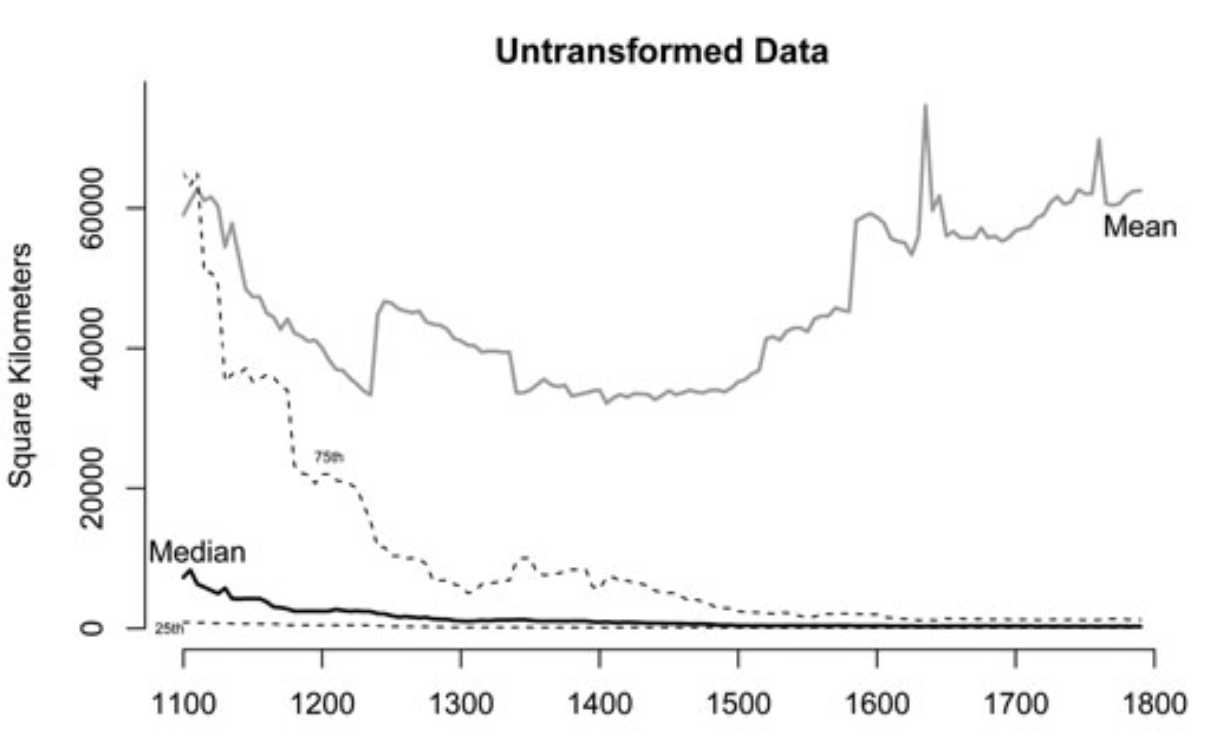
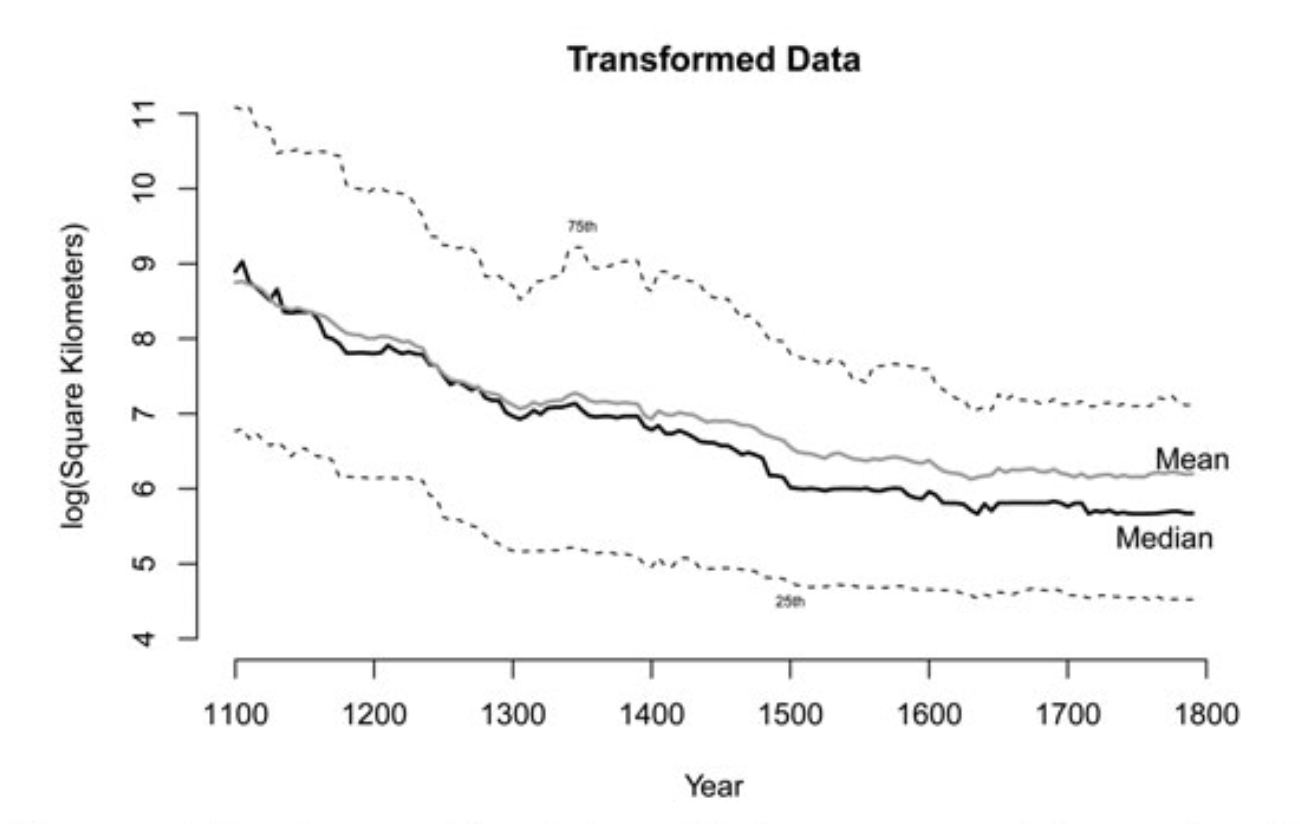
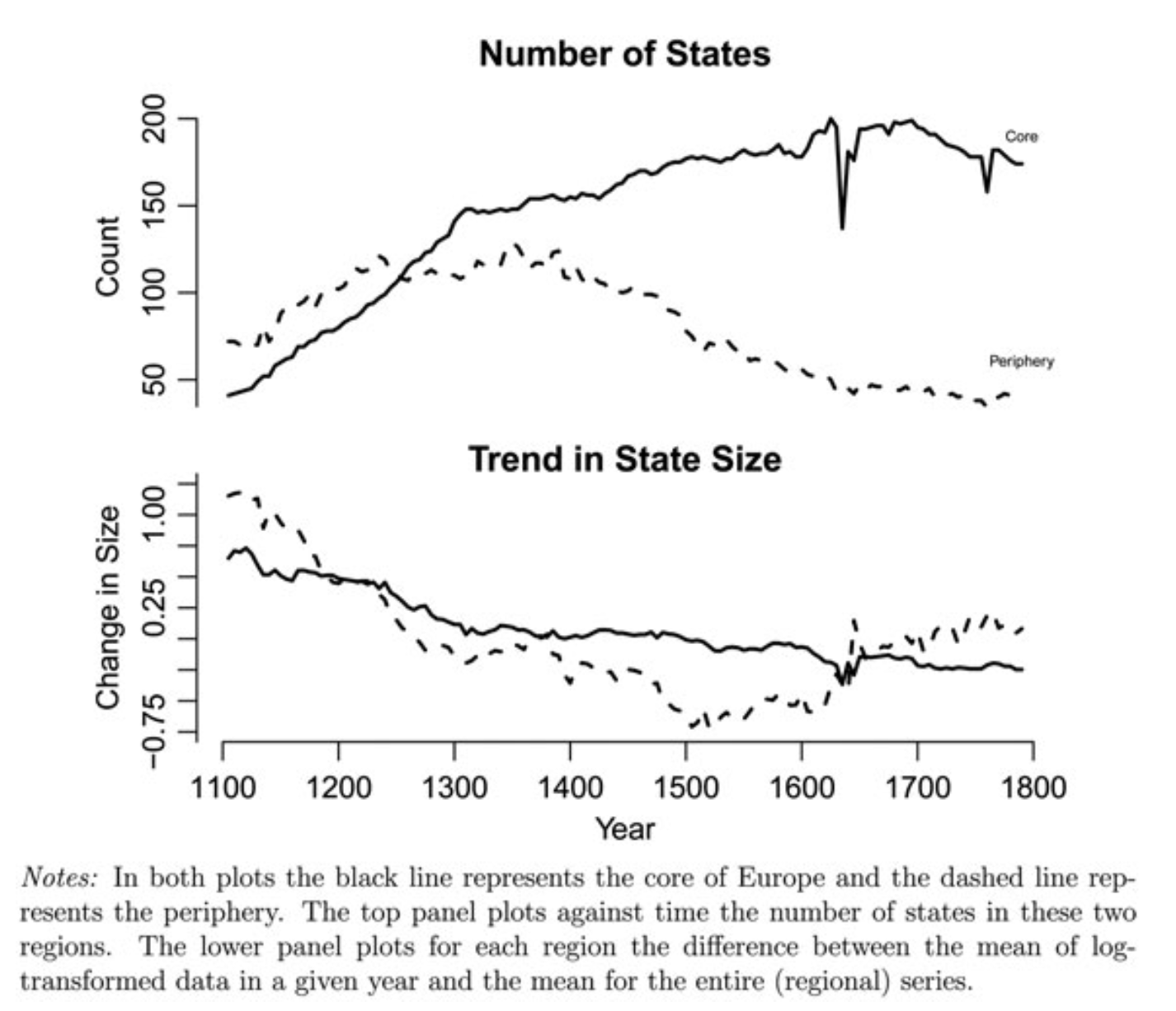
  1. Larger states should be more likely to “survive” overall

Patterns in state survival

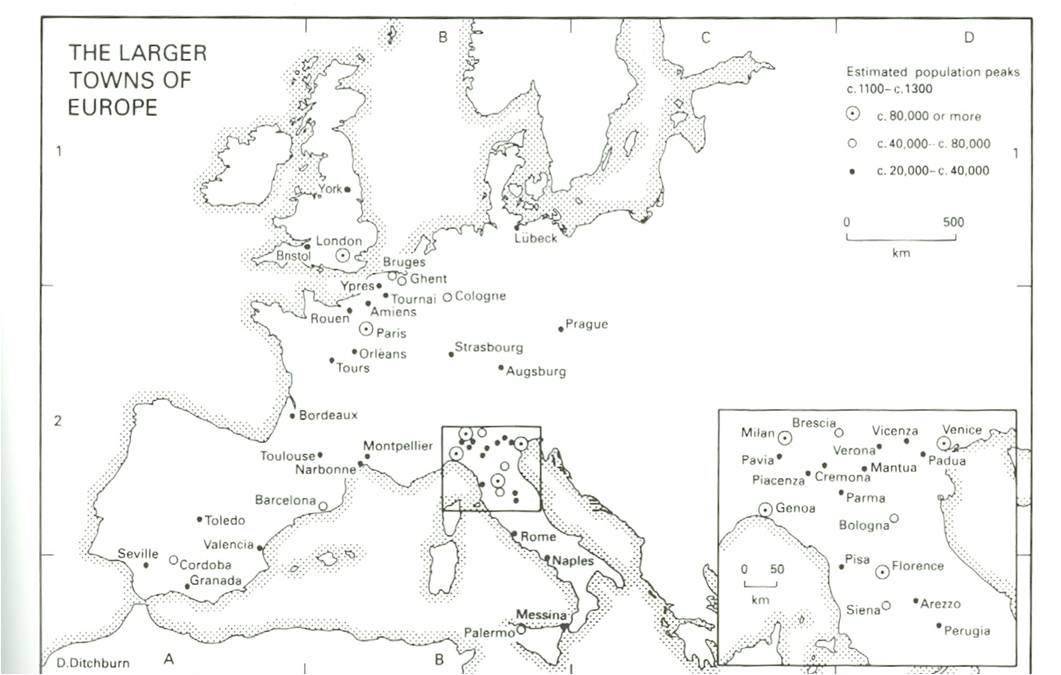
The city belt
The core versus the periphery
Urbanization and fragmentation: The correlation
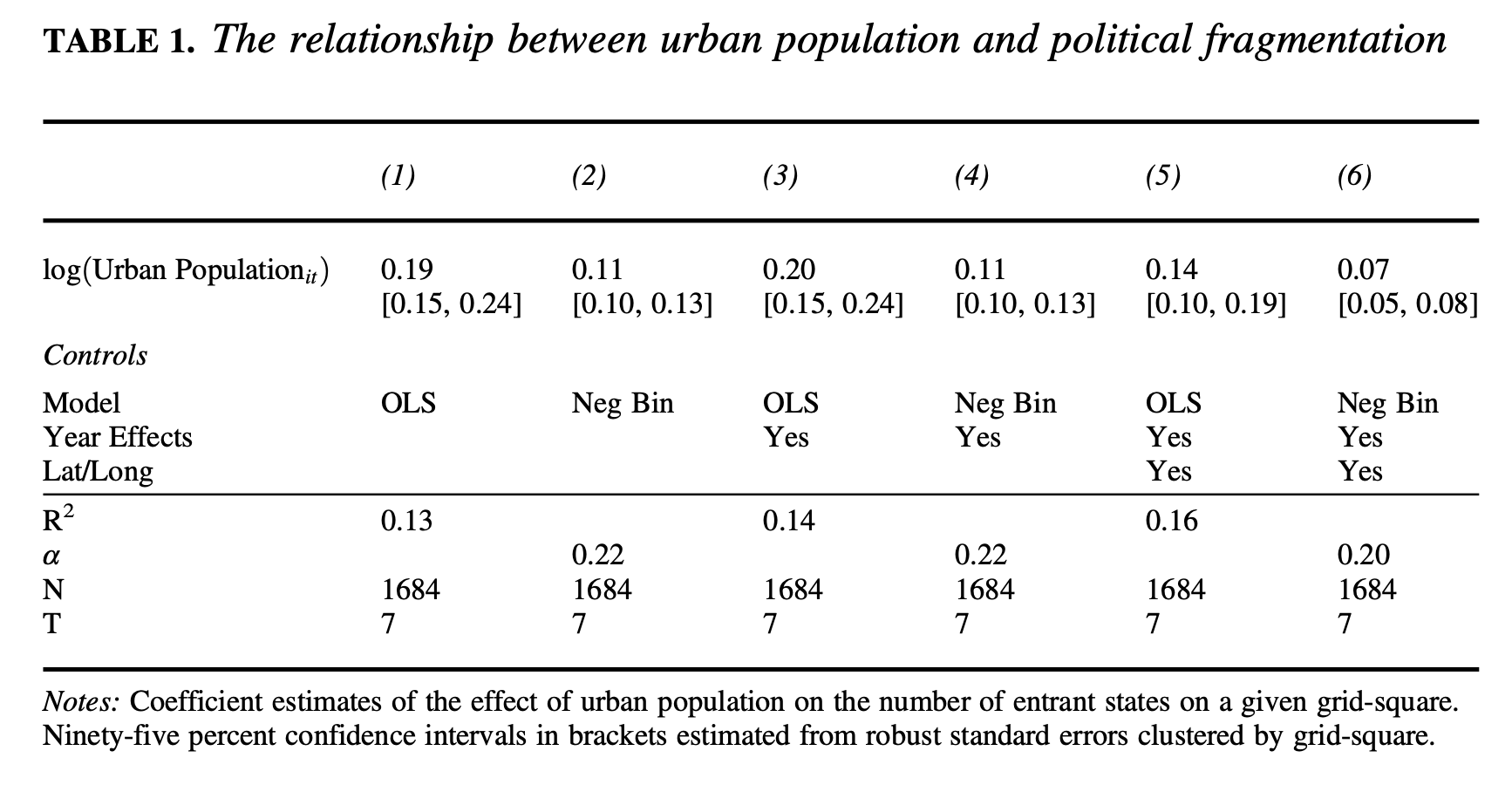
Urbanization and fragmentation: Causal argument

Problem: Urbanization doesn’t happen randomly

  • Can’t rule out reverse causality, confounding variables

Pieces of the argument:

  • Need to be able to grow cereals (e.g. wheat) to sustain cities
  • Some places had a climate better suited to grow cereals
  • Climate unlikely to affect fragmentation except through urbanization

Statistical finding: Higher fragmentation in cereal-suitable locales

Interpretation: Urbanization caused fragmentation

Wrapping up

To do for next time

Read the Thies article on war and statebuilding in Latin America

  • Guide to be posted later this evening

Reminder — office hours

  • Mine: Tuesday, 2:00–3:30, Commons 326
  • Seungho: Friday, 3:00–4:30, Commons 317