How war made states in Europe

PSCI 2227: War and State Development

Prof. Brenton Kenkel

Vanderbilt University

January 21, 2026

Recap

Previously in PSCI 2227 — the basics of state development

  • Spruyt 1994: sovereign territorial states won out — but weren’t inevitable

  • Olson 1993: state development as evolution of criminal enterprise

  • Sánchez de la Sierra 2020: evidence for Olson’s theory from the DRC

Today’s agenda

Putting the war in “war and state development”

  1. Crash course on theories of war

  2. Tilly’s account of war and state development in Europe

    • How war made states
    • Why this process was self-perpetuating
    • The role of commerce and capital

Why wars happen

aka “PSCI 2221 in 30 minutes”

Building a theory of war

War, for our purposes: organized violence in pursuit of political aims

Basic premises for a theory of war

  • Rulers’ interests may come into conflict
  • They can resolve these conflicts through diplomacy (bargaining) or force
  • They consider the costs and benefits of each approach
    • Implicitly ruling out emotional/psychological explanations
    • “Rationalist” approach — widely, but not universally, used in the field

Further reading on causes of war

  • Fearon 1995, “Rationalist Explanations for War”
  • Powell 1999, In the Shadow of Power

The bargaining model of war

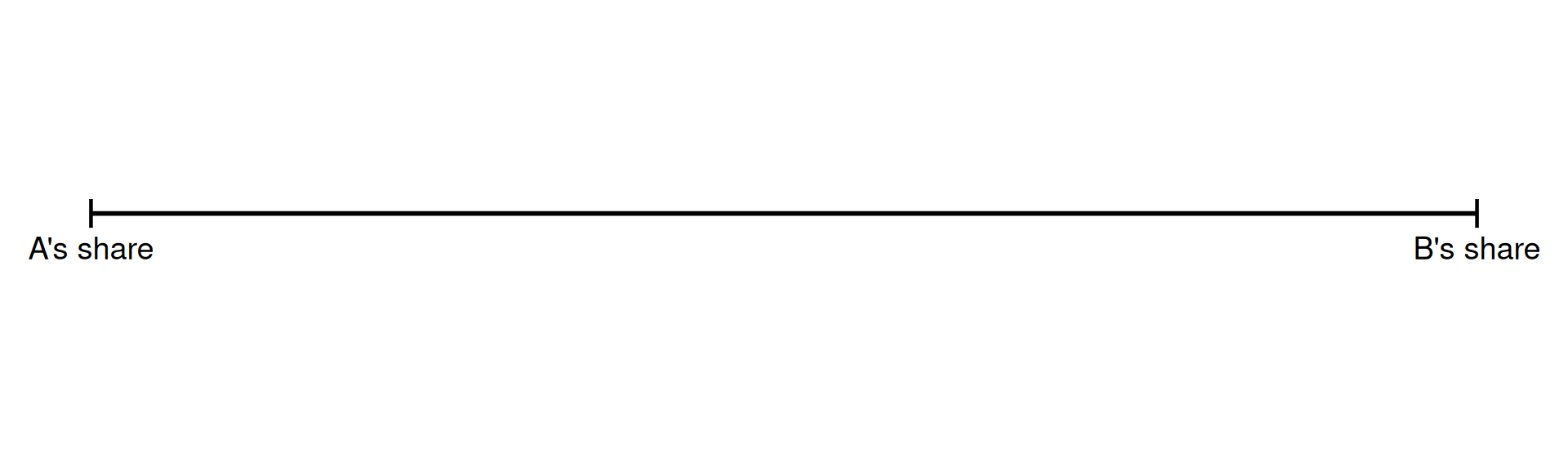
two rulers, A and B, seeking to divvy up “territory”

(source of dispute doesn’t need to literally be territory)

The bargaining model of war
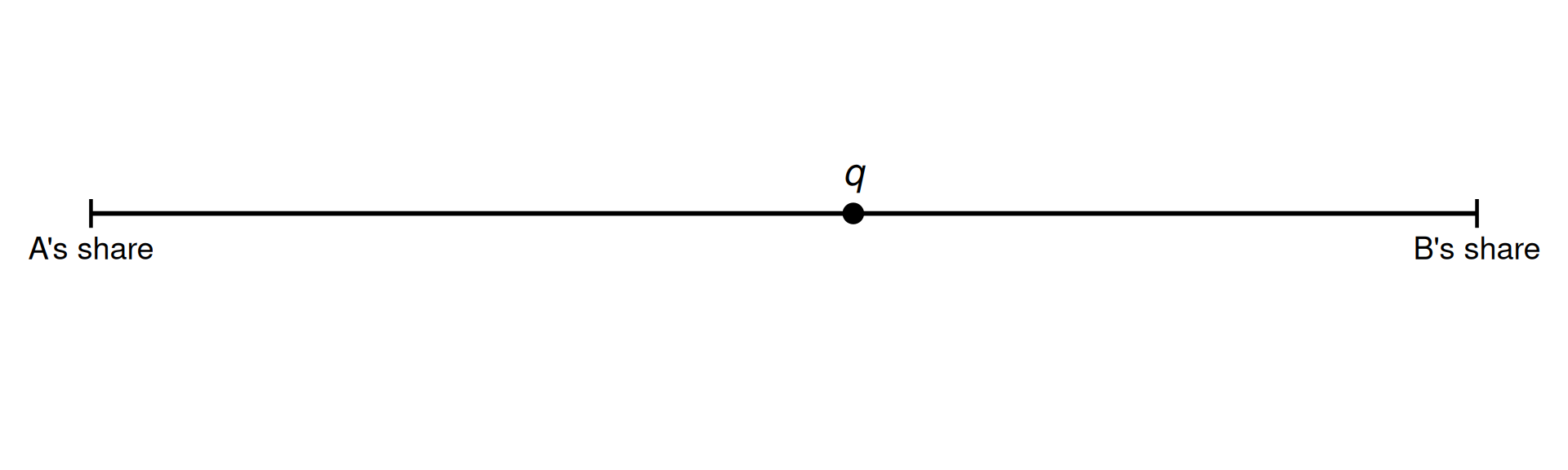
q: the status quo division of territory

The bargaining model of war
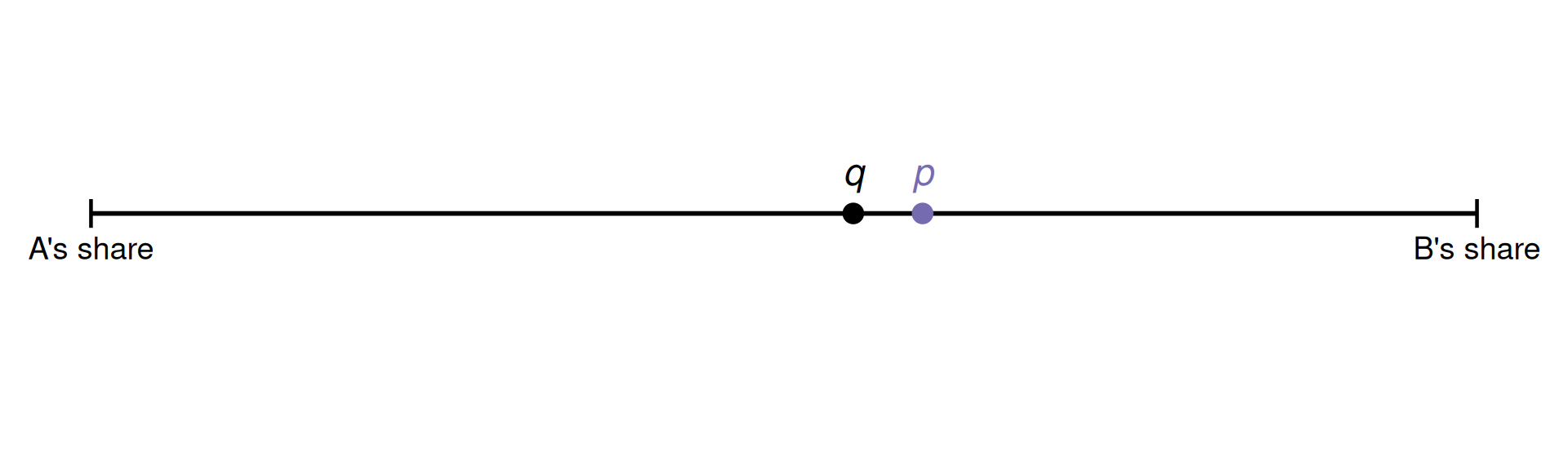
p: how much could A win by fighting?

The bargaining model of war
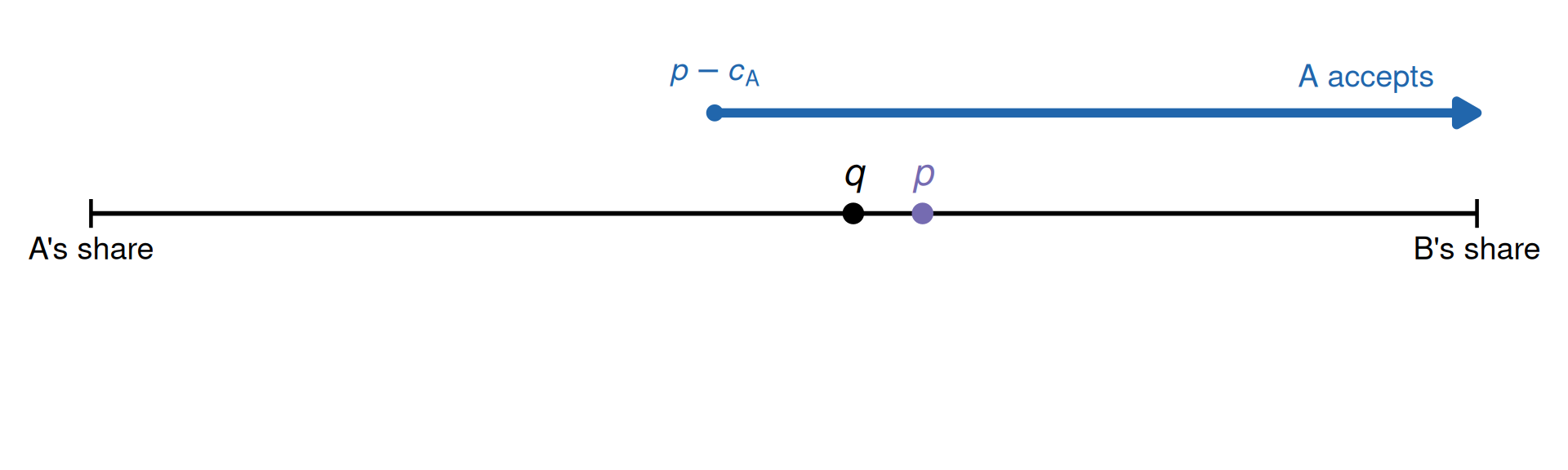
A’s acceptance set: what divisions would A prefer over war?

(incorporates costs of war)

“satisfied” = status quo in acceptance set

The bargaining model of war
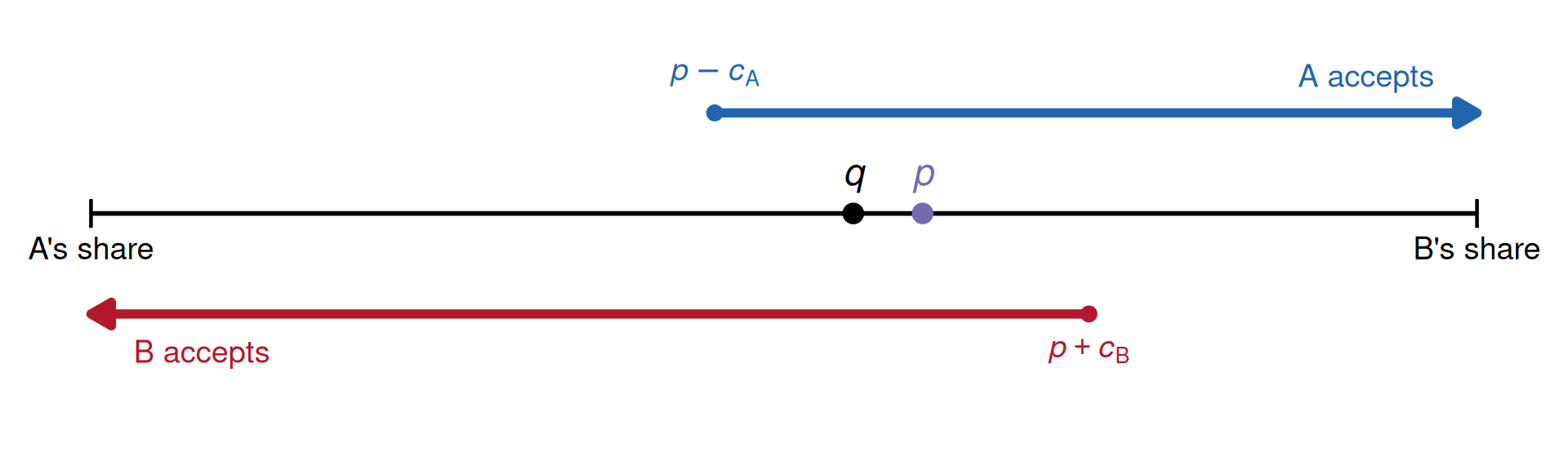
B’s acceptance set: what divisions would B prefer over war?

(also incorporates costs)

“satisfied” = status quo in acceptance set

The bargaining model of war
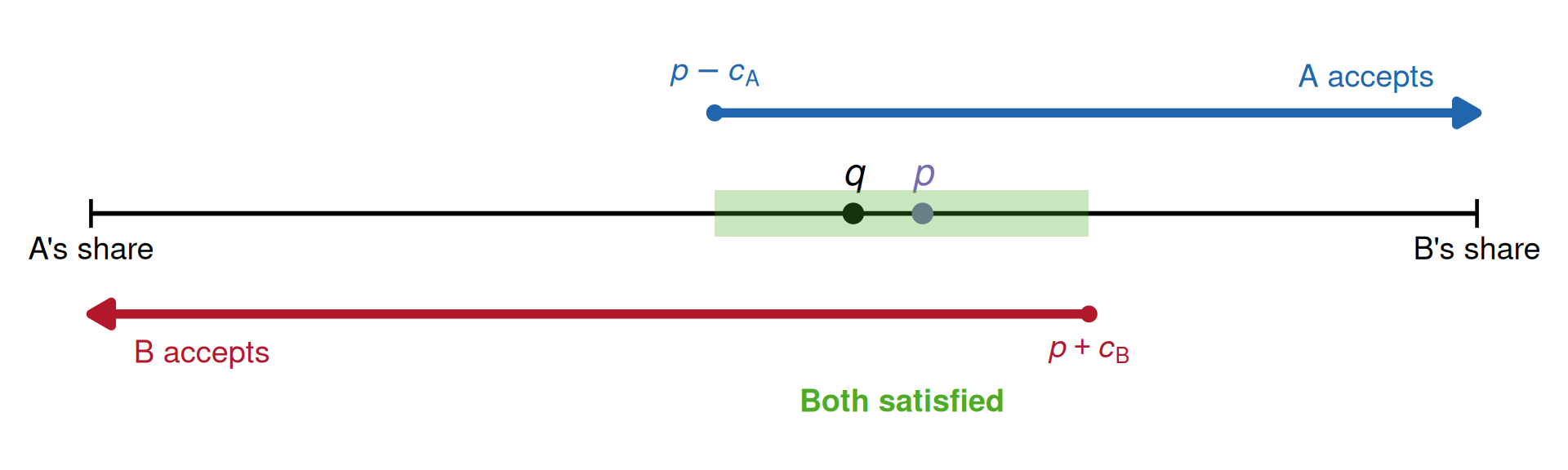
Bargaining range: agreements mutually preferable to war

The bargaining model of war
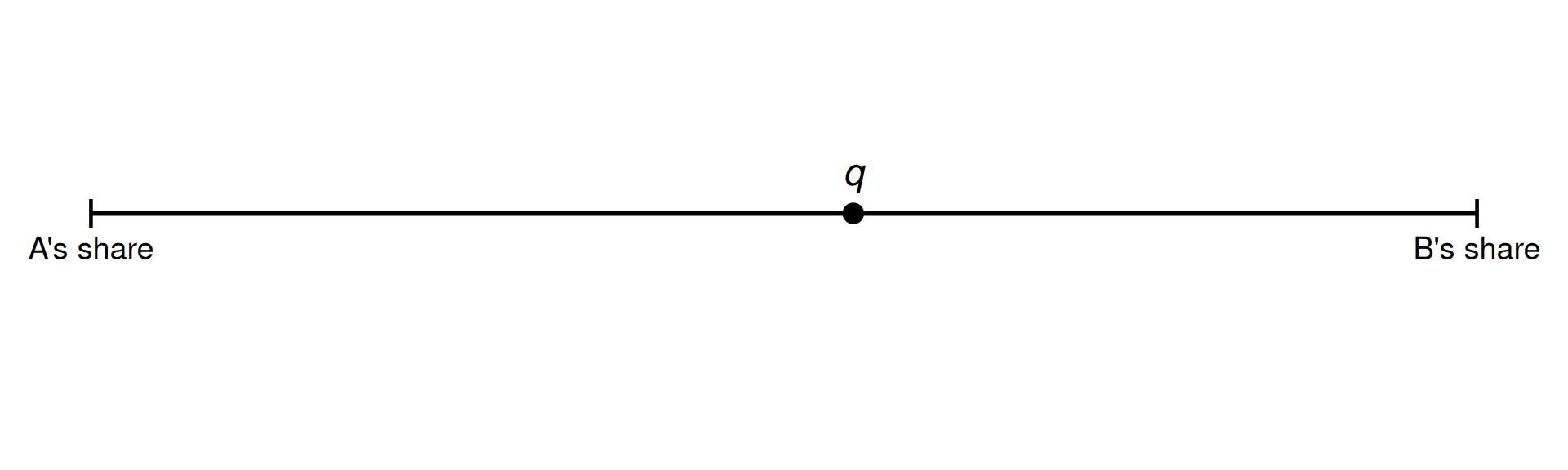
status quo enough out of line with military power \(\leadsto\) dissatisfaction

The bargaining model of war
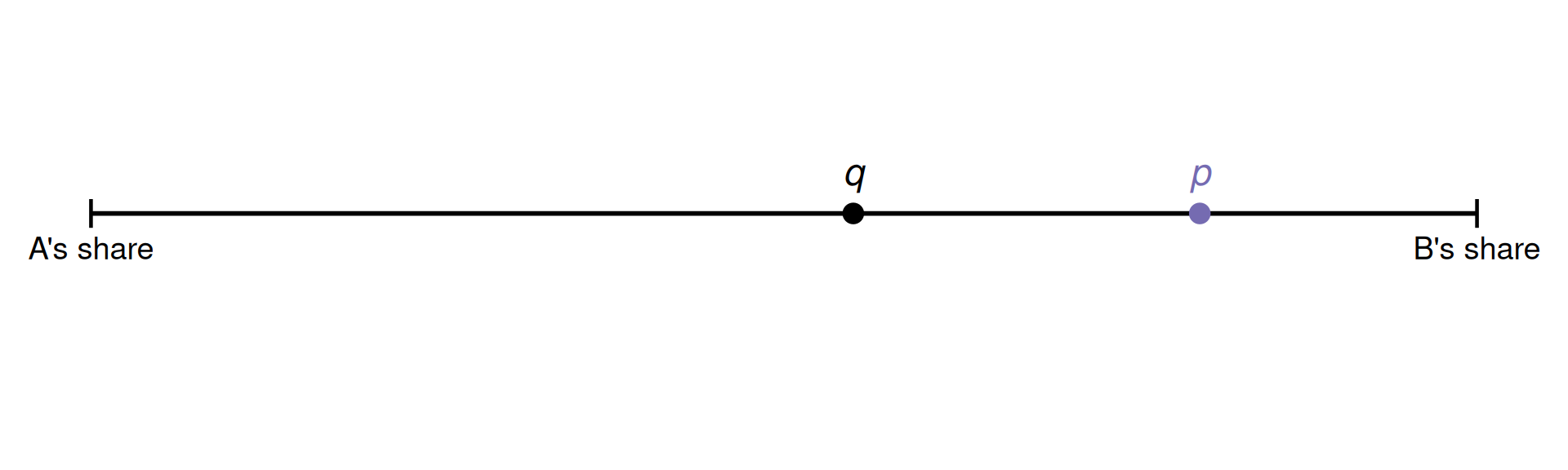
status quo enough out of line with military power \(\leadsto\) dissatisfaction

The bargaining model of war
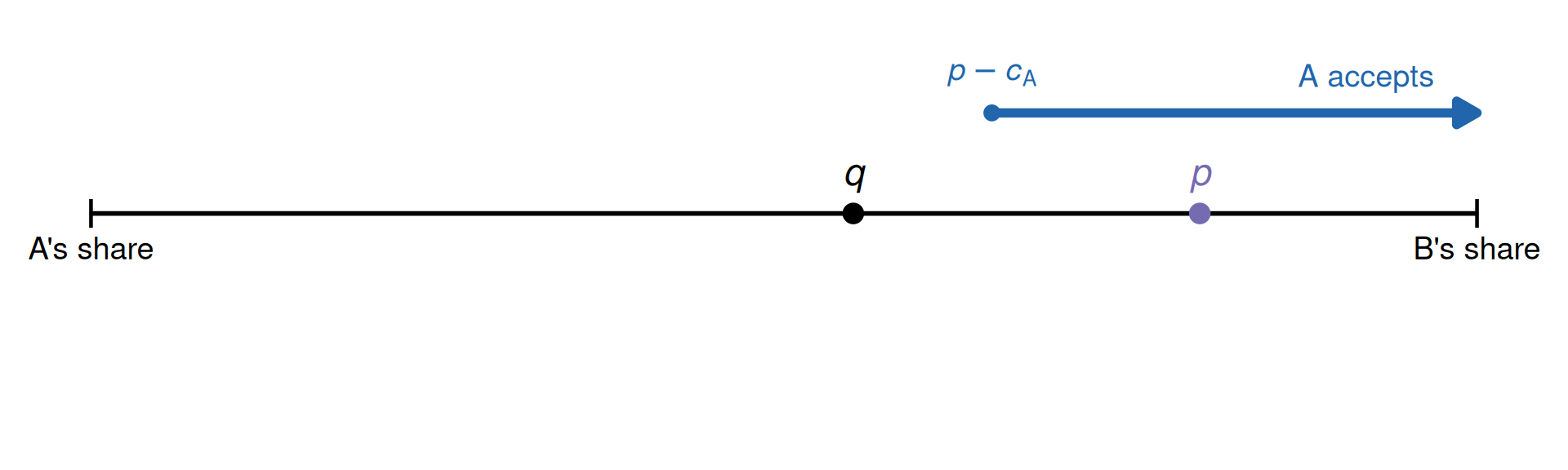
status quo enough out of line with military power \(\leadsto\) dissatisfaction

The bargaining model of war
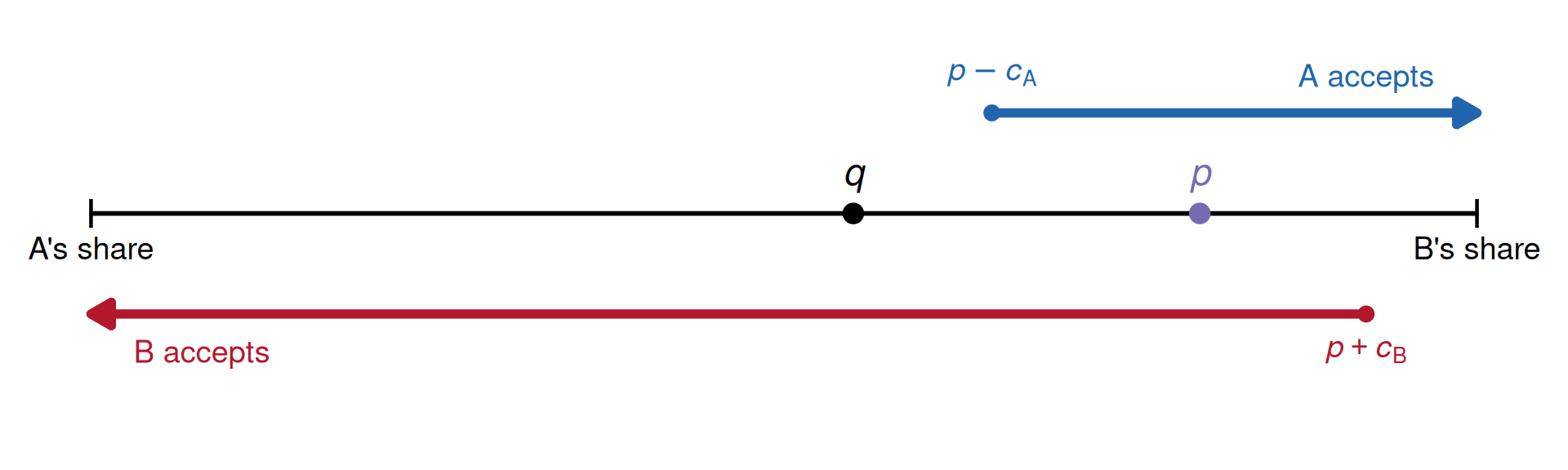
status quo enough out of line with military power \(\leadsto\) dissatisfaction

The bargaining model of war
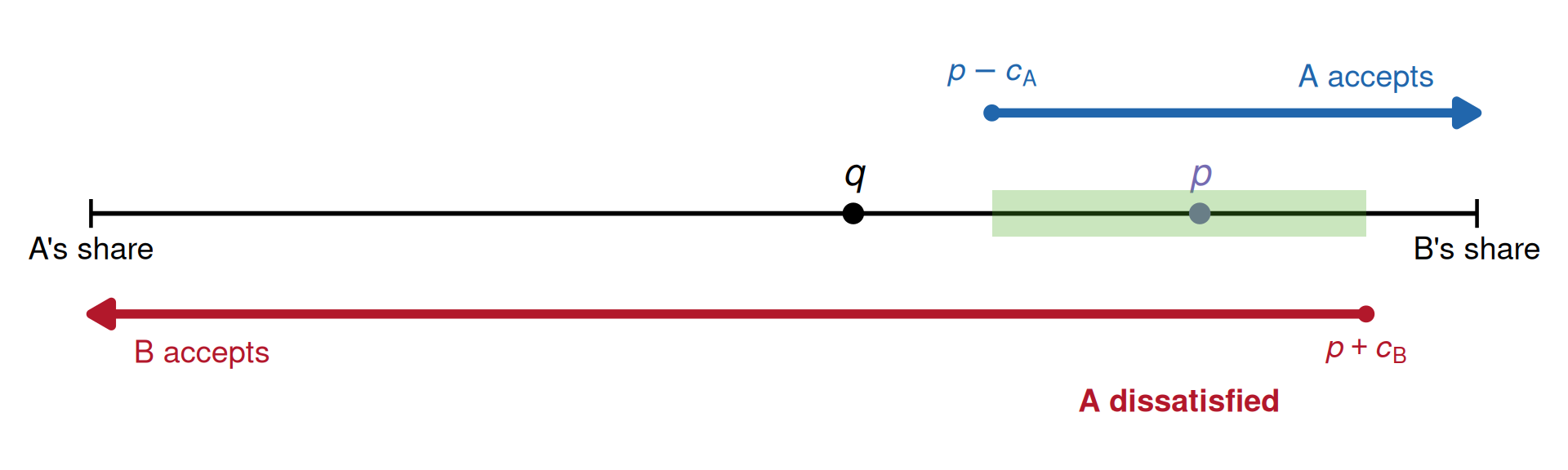
status quo enough out of line with military power \(\leadsto\) dissatisfaction

dissatisfaction is necessary for conflict but not sufficient

The insufficiency of dissatisfaction

Even when a state is dissatisfied, there are mutually acceptable agreements

Dissatisfaction \(\leadsto\) status quo needs revision

  • But that can happen through bargaining as well as war
  • And bargaining gets there with fewer costs

The hurdle that any theory of conflict must clear:

   Why don’t they reach a bargain they both prefer over war?

Incomplete information

Saddam Hussein (Getty Images)

Lots of secrets: strength, competence, willingness to fight

\(\leadsto\) countries don’t know each other’s “breaking points”

\(\leadsto\) potential bargaining failure

e.g., 2003 Iraq War

  • U.S. didn’t know Iraq didn’t have nuclear weapons
  • Iraq didn’t know U.S. would invade if it thought Iraq was nuclear

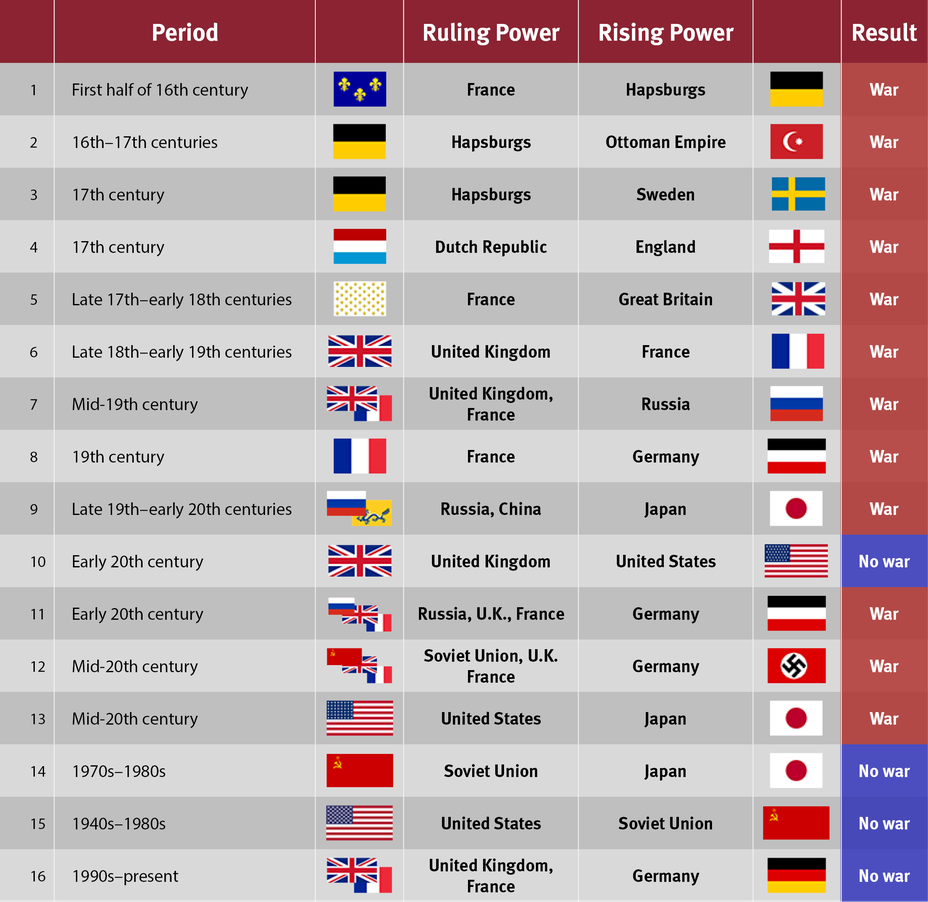
Shifting power and commitment problems

One country rising, other declining

Declining state wants to “lock in” today’s balance of power

Rising state can’t commit not to renege on a deal made today

\(\leadsto\) anything that would buy off the declining state, the rising state can’t credibly promise to give
Domestic politics

Baseline bargaining model assumes “the state” pays costs + receives benefits

But what if the public pays the cost and the leader gets the benefits?

  • Old days: direct profit from crown lands
  • Modern times: “rally round the flag” effect

Possible divergence between public interest + leader actions

… especially if ruler is unrepresentative and unconstrained

War-making and state-building

Tilly 1990, “How War Made States, and Vice Versa”

Tilly proposes a theory to explain three patterns in early modern Europe

  1. Consolidation and growth of territorial states
  1. Increased violence across borders, decreased violence within them
  1. Rise of capital-intensive modes of production and violence

Tilly’s theory

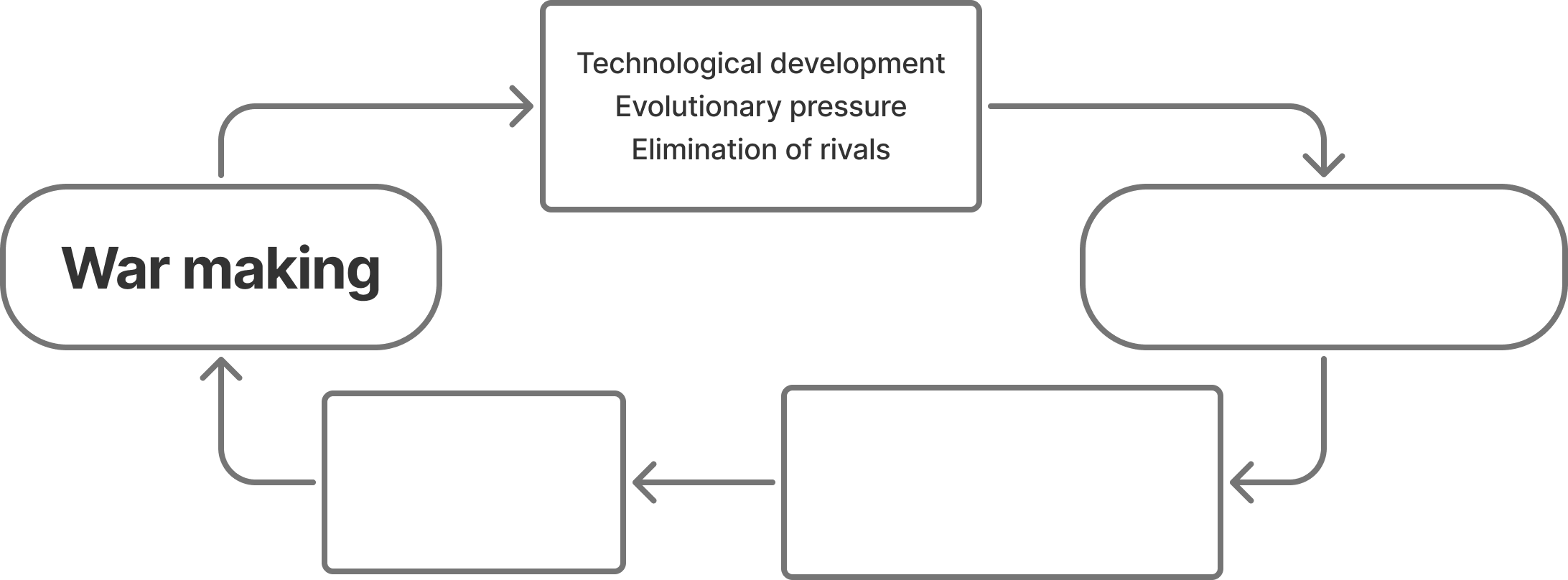
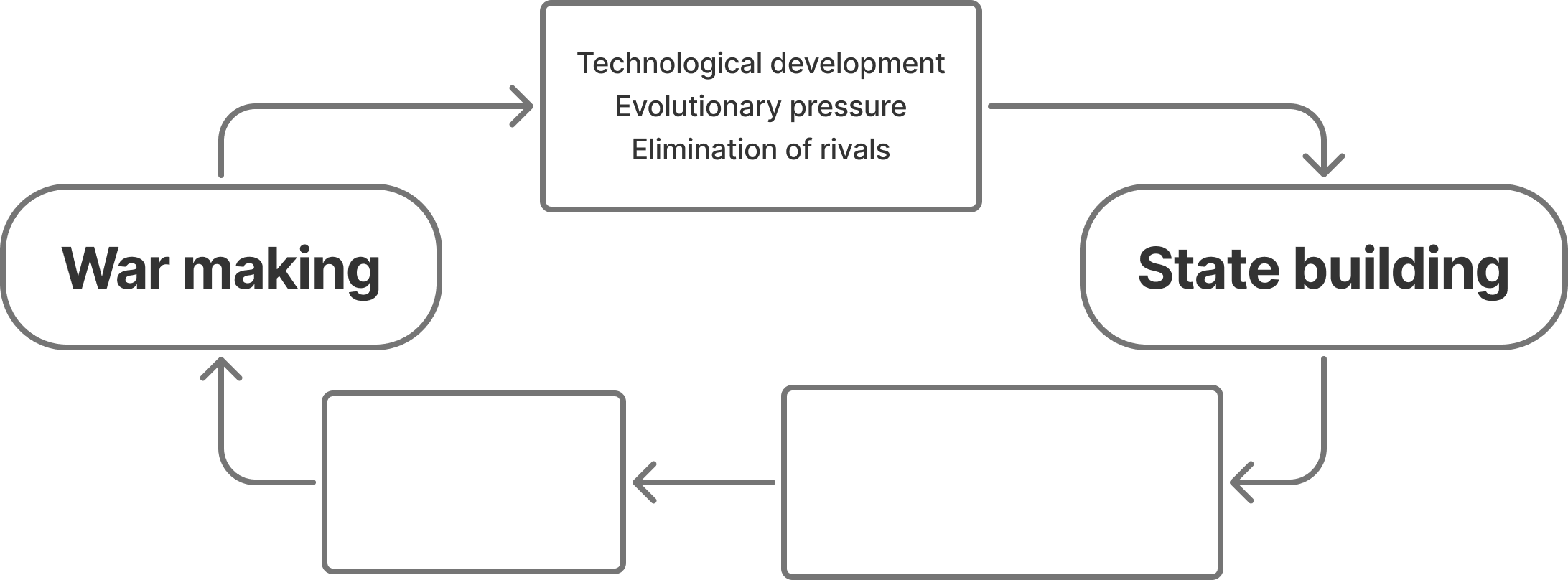
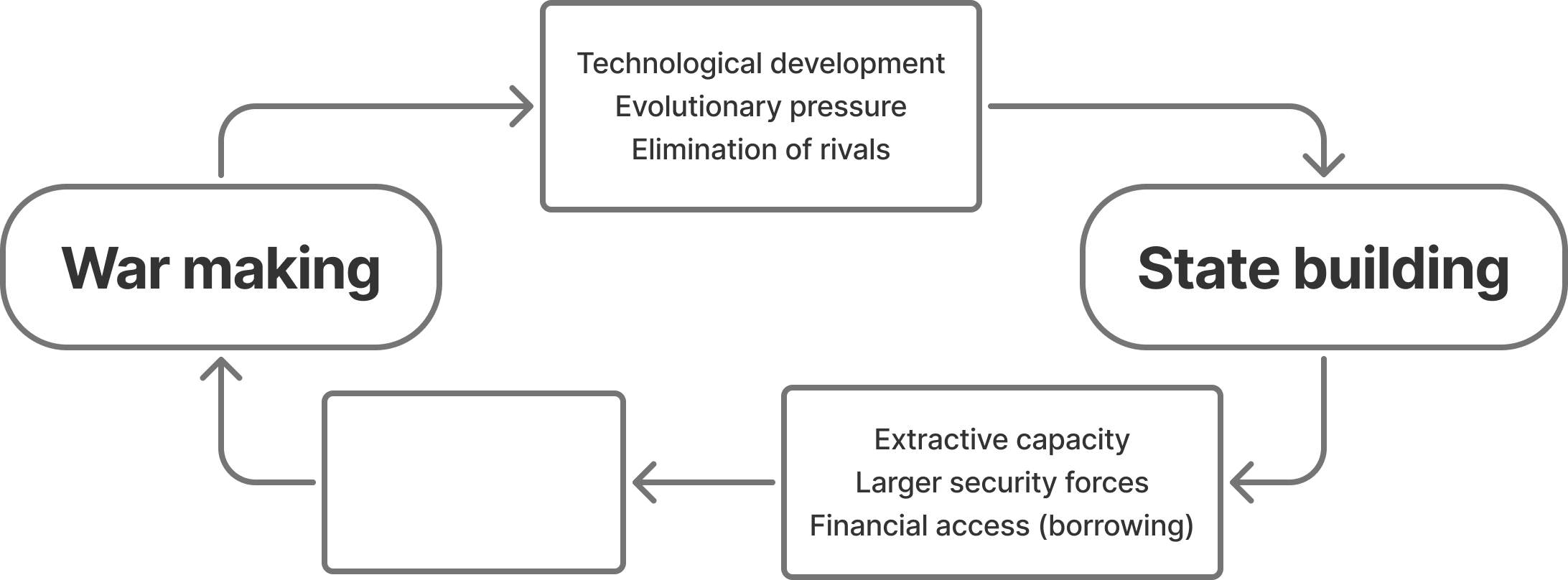
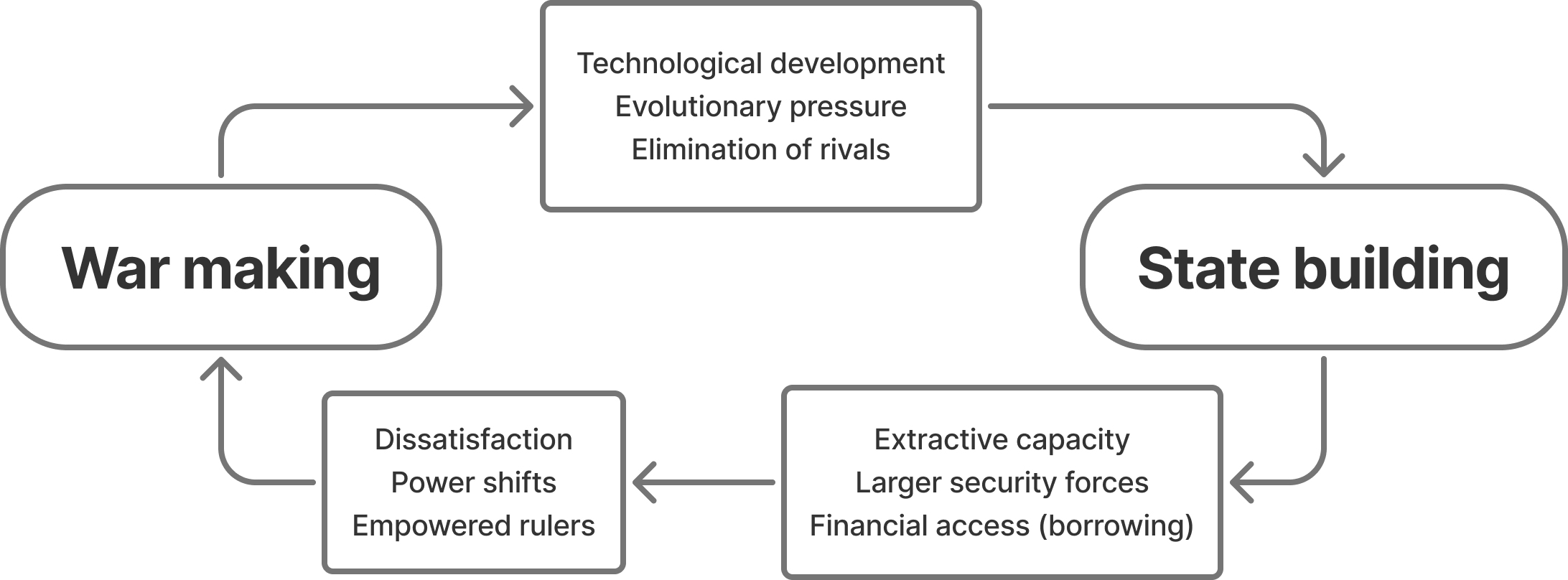
“War made the state, and the state made war”

Premises

  • Rulers want to stay in power + get rich along the way
  • Rampant opportunity + willingness to use violence to gain territory
    • State of anarchy — no one to stop the use of force

Conclusions

  • Military competition forced rulers to extract immense resources to keep up
  • Centralized, territorial states were best suited to survive — and then to shake down their neighbors
  • Wartime governance innovations persisted even when threats dissipated

Key mechanisms in the theory


The role of commerce and capital

Commercial states have major advantages in wartime

  • Most important thing is to have the bigger army
  • Even with conscription, can’t arm + supply soldiers w/o money
  • Almost impossible to ramp up budget quickly enough without borrowing
  • Commercial economy \(\leadsto\) banks, credit markets \(\leadsto\) borrowing capacity

Compounding peacetime advantages

  • Monetary economy — can impose taxes instead of in-kind contributions
  • Less distortion to the underlying economy — keep the engine going

\(\leadsto\) commercial states more successful — and aggressive

Wrapping up

What we did today

  1. Bargaining model of war
    • Necessary condition: military balance out of whack w/ status quo (dissatisfaction)
    • But then, why does bargaining fail?
      • Private information
      • Shifting power
      • Domestic politics/ruler incentives
  2. Tilly’s theory of European state development
    • War makes states — develop or die out
    • Institutional developments persist into peace — and increase the incentive for further war
    • Commercial/capitalist states advantaged in both ends of process

Next time

Tilly tells a nice story — does it stand up to statistical scrutiny?

  • A skeptical take: Abramson, “The Economic Origins of the Territorial State”
  • Reading guide to be posted by Friday

Snowpocalypse contingencies:

  • If Vandy cancels, no class
  • If Vandy’s open but local public schools closed, Zoom class

Keep thinking about the final project!

  • Feel free to email me with ideas,
  • Or come to my office hours, Tues 2:00–3:30pm, Commons 326